ORDER MORE, SAVE MORE 🎉

FREE SHIPPING from €175 • Additional 5% OFF From €350

Skip to product information
1 of 1

Canine Giardia (CGia Ag) Rapid Test

Canine Giardia (CGia Ag) Rapid Test

Regular price €84,90 EUR
Regular price Sale price €84,90 EUR
Sale Sold out
Shipping calculated at checkout.

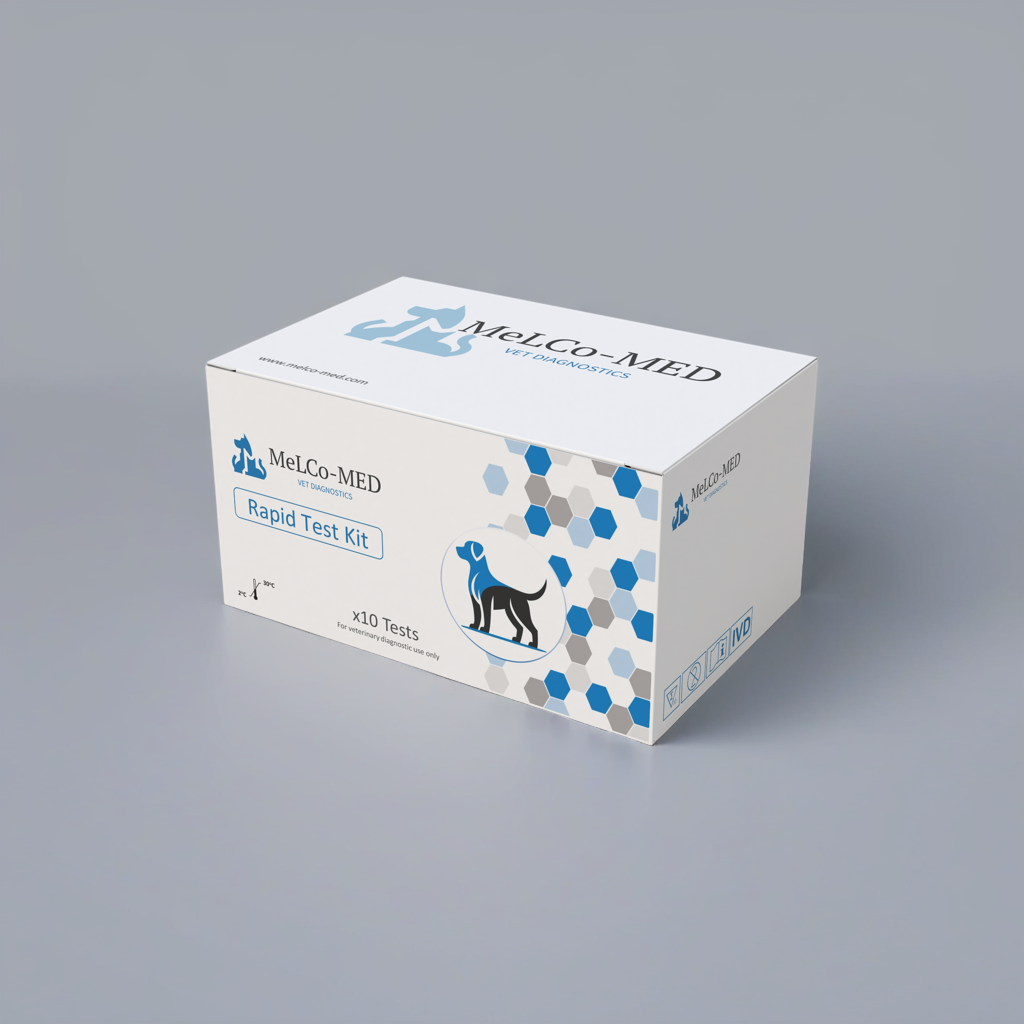
The Canine Giardia (CGia Ag) Rapid Test is a rapid, reliable and easy-to-use diagnostic tool designed to detect Giardia duodenalis antigens (also known as Giardia lamblia or Giardia intestinalis) in dogs. With results available within 5 to 10 minutes, this immunochromatographic test provides a practical alternative to conventional microscopic examination or PCR and can be used directly in kennels or at home. For breeders, it is a valuable tool when dealing with a common intestinal parasite, particularly in group settings where transmission between puppies and adult dogs can occur rapidly.

Product features

  • Contains cassettes and materials for 10 tests
  • Results in 5-10 minutes
  • For fecal specimens
  • High Relative Sensitivity (98.7%)
  • High Relative Specificity (96.4%)
  • High Relative Accuracy (97.6%)
  • Can be stored at room temperature for up to 24 months

Workflow

Step-by-step procedure for performing veterinary diagnosis using the Canine Giardia (CGia Ag) rapid test, from sample collection to result

What is Canine Giardiasis?

Giardiasis is an intestinal infection caused by the protozoan Giardia, a parasite that colonises the small intestine and can interfere with nutrient absorption. It is one of the intestinal parasites frequently encountered in group-housed dogs, including kennels, shelters and breeding facilities. Transmission occurs through cysts present in the environment, water or contaminated faeces, and the cysts can survive for weeks or even months under favourable, particularly humid, environmental conditions.

An important consideration in breeding facilities is that Giardia comprises several genetic assemblages. Some are largely host-specific, including canine and feline assemblages, while others have recognised zoonotic potential according to the veterinary literature, although cross-species transmission is considered uncommon in practice.

Why is Giardia Screening Relevant in Kennels and Breeding Facilities?

Higher transmission risk in group settings

  • Dogs living in groups, such as in kennels, breeding facilities or boarding facilities, have a considerably higher risk of transmission than dogs living alone due to close contact and shared outdoor areas.
  • Puppies living in group settings may be particularly exposed, and digestive disorders associated with Giardia can be more concerning when they persist or recur.

Frequent asymptomatic carriage

  • A dog may harbour and shed the parasite without showing obvious clinical signs. This makes testing relevant when infection is suspected or as part of a broader health-monitoring approach in higher-risk environments, rather than relying solely on clinical observation.
  • Cyst shedding can be intermittent, which may make repeat testing at intervals of several days appropriate when clinical suspicion remains high despite an initial negative result.

Environmental persistence

  • Giardia cysts can persist in the environment, particularly in damp conditions, making complete eradication more challenging once the parasite has become established in a kennel or breeding facility.

Symptoms of Canine Giardiasis

Clinical signs are often gastrointestinal but may be mild or absent in some infected dogs:

  • Diarrhoea, often chronic or intermittent and sometimes containing mucus
  • Soft to watery stools, sometimes with an unpleasant odour
  • Weight loss or impaired growth in puppies in cases of persistent infection
  • Bloating and abdominal discomfort
  • Occasional vomiting in some cases
  • Mild lethargy associated with chronic digestive discomfort

Giardiasis in Puppies: Why Is Particular Vigilance Important in Breeding Facilities?

Puppies may be particularly exposed to Giardia infections, especially when they live in groups with other dogs. In a breeding facility, close contact, shared areas and environmental contamination can favour the spread of the parasite. Digestive signs can vary considerably, and some infected dogs may show no obvious symptoms.

In puppies, persistent or recurrent diarrhoea, soft stools, weight loss or impaired growth may justify testing for Giardia, among other possible causes of digestive disorders. A negative result does not necessarily rule out infection when clinical suspicion remains high, as parasite shedding can vary over time. In such circumstances, a veterinarian may recommend repeat testing or the use of another diagnostic method.

In a breeding facility experiencing diarrhoea in several puppies, testing and hygiene measures should be considered as part of an overall management approach, in consultation with a veterinarian.

Recommended Screening Protocol for Breeding Facilities

In case of persistent digestive symptoms

  • Test any dog with chronic or recurrent diarrhoea that does not respond to conventional symptomatic treatment.

When introducing a new dog

  • Consider screening during quarantine before introducing the dog into the group, particularly for dogs coming from shelters, shows or other breeding facilities.

When a confirmed case occurs within the group

  • Consider extending screening to dogs that have been in contact with the affected animal, as transmission in group settings can occur even among asymptomatic animals.
  • Strengthen environmental hygiene measures, including thorough removal of faeces, cleaning of outdoor areas, management of damp conditions and disinfection of shared equipment.

Further reading: health protocols for dog breeding facilities

Management of giardiasis forms part of a broader health and biosecurity protocol, which is particularly important when introducing new dogs, during breeding and when monitoring puppies. Read our guide to health protocols in dog breeding facilities, covering the main screening measures to consider before, during and after reproduction.

Read our guide to health protocols in dog breeding facilities

Test Limitations

  • As with all diagnostic tests, negative result does not necessarily rule out a Giardia infection. If clinical suspicion remains high, the veterinarian may recommend repeat testing or the use of another diagnostic method.
  • A positive result should be interpreted in conjunction with the animal's clinical signs and the circumstances within the individual animal or group.
  • This test is a screening tool and does not replace a veterinarian's clinical assessment or additional diagnostic examinations when required.

For detailed information on the conditions of use, precautions, test performance and limitations, please refer to the Instructions for Use (IFU) provided with the kit.

What to Do in Case of a Positive Result

  • A positive result should be discussed with your veterinarian to determine the appropriate antiparasitic treatment protocol.
  • Given the risk of transmission in group settings, temporary reinforcement of hygiene measures is recommended, including thorough removal of faeces, cleaning of surfaces and management of damp areas.
  • Post-treatment testing may be considered to assess whether the infection has been cleared, in consultation with your veterinarian.

Breeder FAQ – Canine Giardiasis

Q: Should a dog that tests positive be isolated from the rest of the breeding facility?

A: Enhanced hygiene management is recommended during treatment. Isolation measures should be discussed with your veterinarian based on the layout of your facility and the number of animals in contact with the affected dog.

Q: Should a puppy with soft stools but no other symptoms be tested?

A: Persistent or recurrent diarrhoea in a puppy may justify testing, as giardiasis is one of the possible causes of chronic digestive disorders in group-housed dogs.

Q: Does a first negative test completely rule out giardiasis?

A: Not necessarily. Cyst shedding can be intermittent. If clinical suspicion remains high, your veterinarian may recommend repeat testing after several days or another diagnostic method.

Q: Can canine giardiasis be transmitted to humans?

A: Some Giardia genetic assemblages have recognised zoonotic potential, although transmission from dogs to humans is considered uncommon. Good hand hygiene is nevertheless recommended after handling an infected animal or its faeces.

Q: How long can Giardia cysts survive in a kennel?

A: Cysts can persist for several weeks in damp environments, which is why thorough cleaning, disinfection and drying of high-risk areas are important following a confirmed case.

Scientific References and Further Information

  • Purdue University College of Veterinary Medicine — Addressing Giardia in Kennels: Implications for canine health, management and welfare
  • European Scientific Counsel on Companion Animal Parasites (ESCCAP): www.esccap.org
  • European Scientific Counsel on Companion Animal Parasites (ESCCAP): Guideline 3
  • European Scientific Counsel on Companion Animal Parasites (ESCCAP): Guideline 4
  • European Scientific Counsel on Companion Animal Parasites (ESCCAP): Guideline 6 – Control of Intestinal Protozoa in Dogs and Cats

View full details
Your cart
Product Product subtotal Quantity Price Product subtotal
Canine Giardia (CGia Ag) Rapid Test
Canine Giardia (CGia Ag) Rapid TestMMCANRT011
€84,90/ea
€0,00
€84,90/ea €0,00