
ORDER MORE, SAVE MORE 🎉

Canine Leishmania (LSH Ab) Rapid Test
Canine Leishmania (LSH Ab) Rapid Test
Couldn't load pickup availability
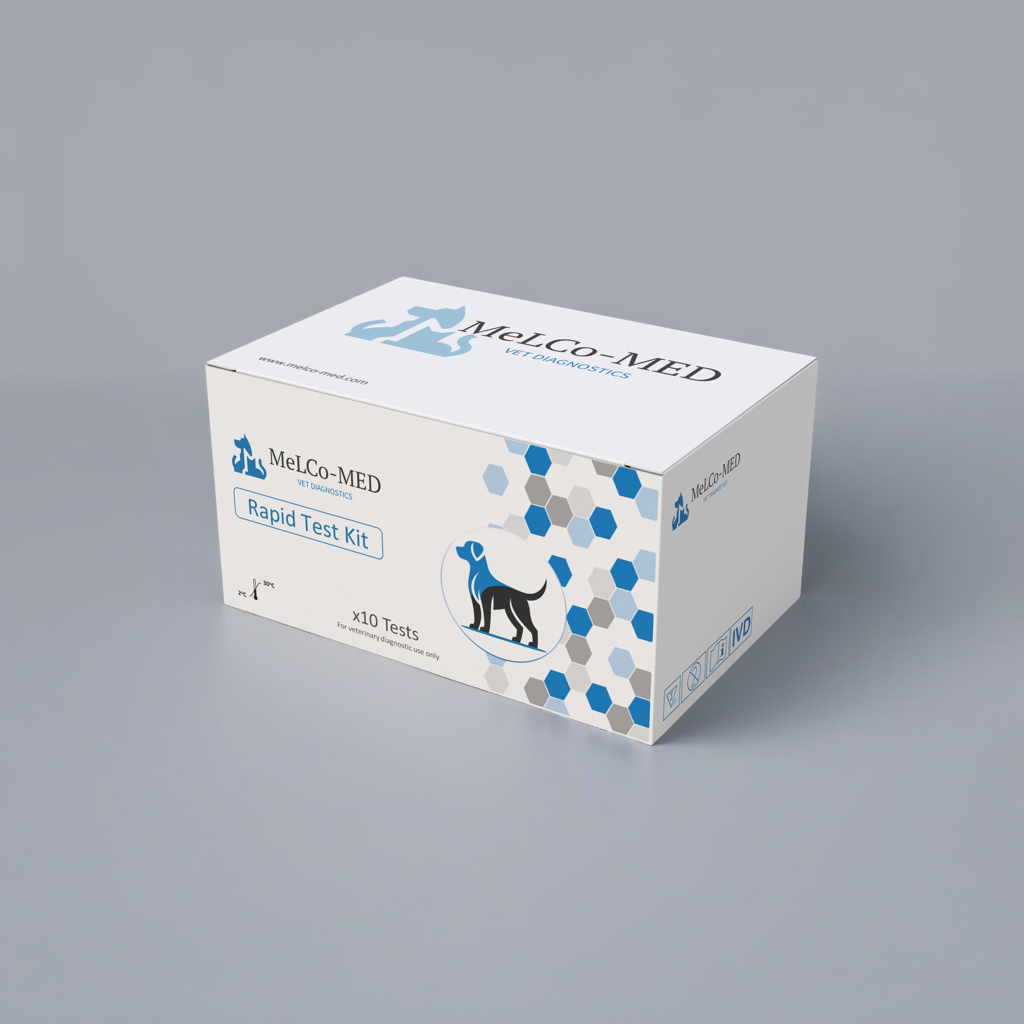
The Canine Leishmania (LSH Ab) Rapid Test is a fast, reliable diagnostic tool designed to detect Leishmania infantum antibodies in dogs (canine leishmaniasis). With results in just 5 to 10 minutes, this immunochromatographic test allows breeders to screen directly on-site, with no need to wait for lab results. For any breeder based in an endemic area, or whose breeding dogs travel to or have stayed in southern France or other Mediterranean regions, this screening test is an important part of a sound health protocol — particularly before breeding.
Product features
- Contains cassettes and materials for 10 tests
- Results in 5-10 minutes
- For whole blood, serum, or plasma specimens
- High Relative Sensitivity (100%)
- High Relative Specificity (97.5%)
- High Relative Accuracy (98.4%)
- Can be stored at room temperature for up to 24 months
Workflow

What is canine leishmaniasis?
Canine leishmaniasis is a parasitic disease caused by the protozoan Leishmania infantum, transmitted through the bite of sandflies — small insects distinct from mosquitoes and ticks. It's a potentially serious, chronic disease that's endemic across the Mediterranean basin. Southern France has long been a recognised risk area, and European veterinary surveillance data show the sandfly's range gradually extending northward in recent years, linked in part to shifting climate patterns.
Once inoculated, the parasite can spread throughout the body (skin, lymph nodes, bone marrow, kidneys, and other organs). Incubation can be lengthy — anywhere from several months to several years — before clinical signs appear.
Why screening matters for breeders
Risk areas and travelling breeding dogs
- Screening is particularly relevant for any kennel located in an endemic area, or for any breeding dog that has spent time — even briefly — in a risk area (holidays, exposure, an out-of-area stud visit, seasonal travel)
- As the vector's geographic range expands, staying alert beyond the traditionally recognised risk zones is increasingly worthwhile
What's at stake for breeding
- Mother-to-puppy transmission (transplacental or during whelping) has been documented in the veterinary literature, which is why testing female breeding dogs in risk areas before mating is recommended
- Once symptomatic, the disease can have a lasting effect on a breeding dog's overall condition
No definitive cure
There's currently no treatment that fully clears the parasite from an infected dog; management instead focuses on long-term control of the disease and its symptoms — which is exactly why prevention, early screening, and protection against sandfly bites matter so much.
Symptoms of canine leishmaniasis
Clinical signs vary widely and often develop gradually, which is why proactive screening — rather than relying on visible symptoms alone — is worthwhile in risk areas:
- Skin lesions: dermatitis, hair loss (especially around the eyes, ears, and muzzle), ulceration, crusting
- Progressive weight loss despite a normal appetite
- Swollen lymph nodes (generalised lymphadenopathy)
- Excessive nail growth (onychogryphosis), a fairly distinctive sign
- Lethargy and reduced activity
- In advanced cases: kidney involvement that can progress to chronic kidney disease, one of the leading causes of death linked to the disease
Recommended screening protocol for breeders
Before breeding, in risk areas
Test both breeding dogs, especially if either one lives in or has visited an endemic area.
After a stay in a risk area
Plan a screening test for any dog that has travelled to or lived temporarily in southern France, Spain, Italy, or other recognised Mediterranean endemic areas — keeping in mind the potentially long incubation period before antibodies become detectable.
Routine screening for kennels in endemic areas
Periodic testing of breeding dogs, combined with sandfly-bite prevention measures (specific repellents, treated collars, adjusting outdoor time to avoid the vectors' peak activity hours).
What to do if a test comes back positive
- A positive result should always be confirmed and interpreted together with your vet, taking the dog's overall clinical picture into account — a dog can be seropositive without being actively ill
- A confirmed positive, symptomatic dog needs long-term veterinary care, including regular monitoring of kidney function
- Whether to keep a positive dog in the breeding programme is a decision to make with your vet, weighing the risk of transmission to offspring against the dog's general health
Breeder FAQ: canine leishmaniasis
My kennel is in northern Europe — should I be concerned about leishmaniasis?
Risk remains historically lower outside Mediterranean regions, but the vector's geographic spread observed in recent years justifies extra vigilance — particularly if you're taking in breeding dogs that have spent time in southern regions or abroad in risk areas.
Is there a vaccine against canine leishmaniasis?
Vaccines exist and can be a useful complementary prevention tool to discuss with your vet, but they don't replace protection against sandfly bites or screening breeding dogs in risk areas.
Can a positive dog pass the disease on to its puppies?
Mother-to-puppy transmission has been documented in the veterinary literature, which is why testing female breeding dogs in risk areas before mating — and closely monitoring the litter if the mother tests positive — is recommended.
How long after a stay in a risk area should I wait before testing my dog?
Incubation can be lengthy, with a variable delay before antibodies become detectable. If in doubt, talk to your vet about the best timing for a reliable test, or about repeating the test later.
Can canine leishmaniasis be transmitted to humans?
Leishmaniasis is a zoonotic disease, but transmission occurs through the sandfly's bite — not through direct contact between dog and human.
Should a positive dog be excluded from breeding?
That's a decision to make with your vet, weighing the risk of transmission to offspring against the dog's overall health. There's no single rule that applies to every case.
References and further reading
- European Scientific Counsel on Companion Animal Parasites (ESCCAP): www.esccap.org
- LeishVet Group: leading European expert group on canine leishmaniasis
- LeishVet Guidelines for the Practical Management of Canine Leishmaniosis: https://pmc.ncbi.nlm.nih.gov/articles/PMC3125381/
 Follow us on Bluesky